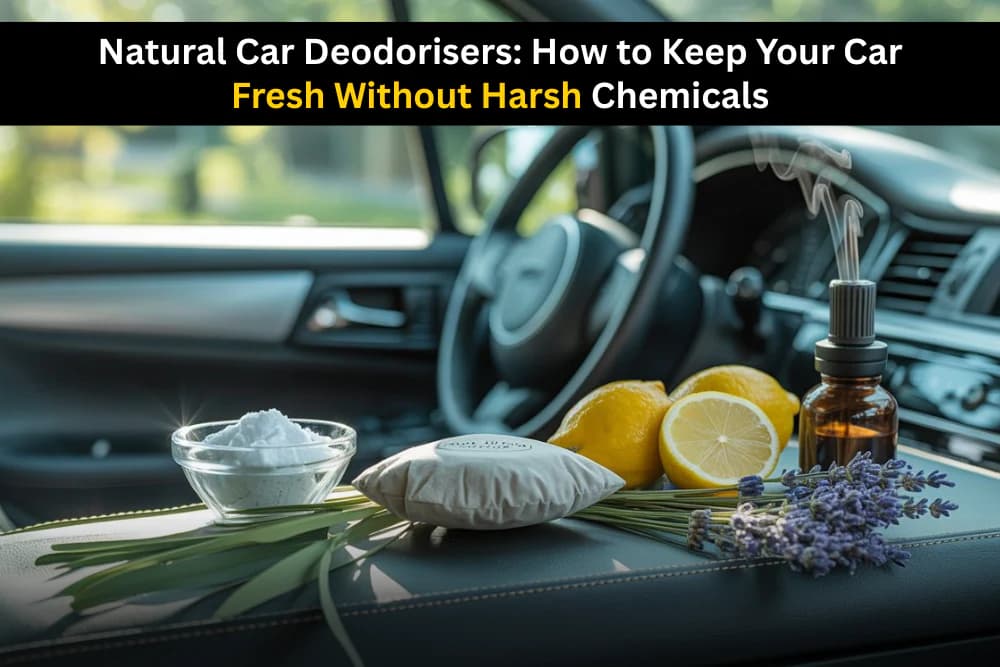
Keeping a car smelling fresh can be surprisingly challenging. Everyday use, food, pets, gym bags, and moisture all contribute to lingering odours that build up over time. While many people turn to chemical-based air fresheners for a quick fix, these often mask smells rather than remove them and can introduce harsh chemicals into a small, enclosed space.
Natural car deodorizers offer a safer, more balanced way to maintain a pleasant driving environment. By focusing on odour removal, airflow, and gentle scent sources, it’s possible to keep your car fresh naturally without overwhelming fragrances or synthetic additives.
Why Traditional Car Deodorizers Often Fall Short
Many standard car air fresheners rely on strong synthetic fragrances to cover unwanted smells. While this can feel effective at first, the results are usually short-lived.
Masking Odours Instead of Removing Them
Most chemical air fresheners simply layer scent on top of existing odours. As the fragrance fades, the original smell often returns, sometimes mixed with artificial notes that feel heavy or unpleasant.
Harsh Chemicals in Enclosed Spaces
Cars are compact environments with limited ventilation. Chemical-heavy car deodorizers may release volatile compounds that contribute to headaches, nausea, or scent fatigue over time. This is one reason many drivers now search for non-toxic car freshener alternatives.
What Makes a Car Deodorizer “Natural”?
A natural car deodorizer focuses on neutralising odours rather than overpowering them.
Natural vs Synthetic Fragrance Sources
Natural options often use plant-based ingredients, essential oils, or absorbent materials rather than artificial fragrance blends. These provide a softer, more breathable scent profile.
Solid and Absorbent Deodorizers
Solid solutions such as activated charcoal, baking soda, or porous natural materials absorb odours instead of releasing liquid chemicals into the air. This makes them a popular choice for chemical-free car deodorizing.
The Importance of Controlled Scent Release
Natural car air fresheners are designed to work gradually. Subtle, consistent fragrance tends to last longer and feels more comfortable in a small space like a vehicle.
How to Remove Stale Odours Before Adding Fragrance
Natural car deodorizers work best when odours are removed at the source.
Clean First, Then Deodorise
Vacuum seats, carpets, and mats regularly. Food crumbs, dirt, and moisture trapped in fabric are common causes of stale smells.
Address Hidden Odour Sources
Check air vents, cup holders, and boot spaces. These areas often hold lingering odours that can affect overall air quality inside the car.

Neutralising Tough Odours: Pets, Gym Bags, and Smoke
Some smells require extra attention before any fragrance is added.
Pet Smells
Pet hair and dander can cling to upholstery. Natural odour absorbers like baking soda or charcoal are effective at neutralising pet smells in cars.
Gym Bags and Damp Fabrics
Sweaty items introduce moisture and bacteria. Removing them promptly and allowing airflow through the car helps prevent lingering odours.
Smoke Smells
Smoke odours settle deep into fabrics. Natural car odour removal methods focus on absorption and ventilation rather than heavy fragrance masking.
How Airflow Affects Scent Performance in Cars
Airflow plays a major role in how a car deodorizer performs.
When air circulates through the cabin, scent is distributed more evenly. Poor airflow can cause fragrance to feel inconsistent or fade faster. This is why many natural car deodorizer solutions rely on passive airflow rather than constant scent release.
Understanding airflow also explains why some people feel their car freshener “stops working” even when it hasn’t.
Why You Stop Smelling Your Car Freshener (Scent Fatigue)
Scent fatigue, also known as nose blindness, occurs when the brain becomes accustomed to a smell.
Why It Happens
When exposed to the same scent continuously, your senses gradually stop registering it. This doesn’t mean the fragrance is gone, only that your brain has tuned it out.
How to Avoid It
Using subtle, natural scents and allowing periods of fresh air circulation helps reduce scent fatigue and keeps the environment feeling clean.
Popular Natural Car Deodorizer Options
Several natural methods are commonly used for chemical-free car freshness.
Activated Charcoal
Known for its powerful odour-absorbing properties, charcoal helps remove smells without adding fragrance.
Baking Soda
An effective natural deodorizer that neutralises acidic odours, especially useful for food or moisture-related smells.
Essential Oils (Used Sparingly)
When diluted properly, essential oils can add a gentle scent. Overuse, however, can be overwhelming in enclosed spaces.
Natural Wood and Bamboo Materials
Porous materials release fragrance slowly and are often used for subtle, long-lasting scent distribution.
Choosing the Right Natural Scent for Your Car
Personal preference plays a big role in selecting a natural car deodorizer.
-
Fresh and citrus scents feel light and energising
-
Woody or tea-based notes offer a calm, clean atmosphere
-
Floral options provide softness when used lightly

The key is moderation. Natural car fresheners work best when they enhance the space rather than dominate it.
Natural Deodorizer Myths and Misconceptions
Natural Deodorizers Don’t Last
Longevity depends on airflow, material, and placement, not just scent strength.
Stronger Means Cleaner
Strong fragrance often masks odours instead of removing them.
Natural Options Are Ineffective
When paired with proper cleaning and ventilation, natural car deodorizers are highly effective.
When Natural Car Deodorizers Work Best
Natural solutions are ideal for:
-
Everyday freshness maintenance
-
Drivers sensitive to strong scents
-
Long-term air quality improvement
They are most effective when combined with regular cleaning and good airflow.
Frequently Asked Questions
Are natural car deodorizers safe for daily use?
Yes. Natural, non-toxic car deodorizers are designed to be gentle and suitable for regular use.
Do natural car air fresheners last as long as chemical ones?
They may feel subtler, but they often provide more consistent, longer-lasting freshness.
Can natural deodorizers remove strong smells?
They work best when odours are cleaned or neutralised first rather than masked.
How often should a natural car deodorizer be refreshed?
This depends on the material used, airflow, and how frequently the car is driven.
Conclusion
Keeping your car fresh doesn’t require harsh chemicals or overpowering fragrances. By focusing on odour removal, airflow, and natural materials, it’s possible to create a clean, comfortable driving environment that feels balanced and breathable. Natural car deodorizers offer a practical, low-toxicity solution for anyone looking to improve air quality inside their vehicle, naturally.